
Structured beginner wiki
Iron Soul Dungeon Wiki: Codes, Rerolls, Forge, Scrolls, Pets & Boss Routes
This Iron Soul Dungeon wiki is a decision map for new Roblox players, not a pile of disconnected claims. Start with the quick route, then open the section that matches your current problem: codes, race rerolls, forge and weapons, scrolls and pets, or boss and gold routes. Every table separates what to check, what to record, and when to stop investing so an uncertain community report does not become a permanent rule.
Quick start for a new player
The safest first loop is short: check the dated code table, keep some rerolls in reserve, choose a weapon role you can control, and test forge decisions with replaceable materials. Do not open every reward or spend every rare item before you know which dungeon route you are trying to improve.
Use this page as an index. The detailed code evidence lives on the dedicated codes page; race and weapon comparisons live in the tier list; blueprints and materials belong to the forge guide; scroll routes and pets have their own pages. That separation keeps updates local and makes the beginner path easier to scan than a long fandom-style category dump.
| First decision | Check | Beginner-safe action | Stop condition |
|---|---|---|---|
| Need free rewards | Source URL, last check, status | Test a reported code in Roblox | Do not budget an unconfirmed reward |
| Need damage | Weapon role and repeatable timing | Use a controllable weapon first | Do not change four variables at once |
| Considering a reroll | Goal and current race effect | Save rerolls until the goal is clear | Stop when the result is not measurable |
| Preparing a run | Scroll, pet, forge, and boss target | Change one support at a time | Stop after the first failure point is found |
- Treat a source report as a lead until the game or a current repeatable source supports it.
- Keep a date beside volatile claims.
- Prefer a stable route over a rare name you cannot reproduce.
Iron Soul Dungeon codes: use the status, not a blanket promise
Codes are the fastest way to answer a new player's first question, but they are also the part of the game that changes most quickly. The dedicated codes page records the code, reward wording, source URL, first-seen field, last verification, and status. Reported active is deliberately different from an in-game confirmation, and an expired record stays visible so stale lists do not recycle it.
Open the full code table before spending a race reroll or planning a forge purchase around a reward. If Roblox returns invalid, expired, already used, or limit reached, record the exact message. A code can be useful without being a permanent fact, and a source URL makes the update trail inspectable.
| Code record | What the wiki shows | Beginner action | Boundary |
|---|---|---|---|
| SEASON2ENDING | Reported rerolls and cash; source and date on codes page | Try once and check the account | Not a guaranteed active claim |
| IRONSOULWEEKEND18 | Reported rerolls, tickets, and rewards | Read the current status first | Source report still needs game check |
| FIXINGPATCH | Source-confirmed expired example | Skip redemption and read the archive | Do not move it back to active |
- Read the dedicated Iron Soul Dungeon codes table for the full six-field record.
- The last-verified date is a check window, not an expiration date.
Race rerolls: decide before you spend
Race rerolls are easiest to evaluate after you know what your weapon and farming loop need. A new player often benefits more from keeping a reroll available than from chasing a rare label with no measurable target. Note the current race, the visible effect, the weapon used, and the route where the change should matter.
The practical question is not simply which race is best. Ask whether the result improves the same encounter, survival problem, movement pattern, or reward loop more than the saved reroll would help later. When public values are incomplete, this wiki records the decision boundary instead of inventing a permanent race tier.
| Situation | Action | Record | Safe boundary |
|---|---|---|---|
| Just started | Keep most rerolls and learn one weapon | Current race and first route | Do not chase a name without a goal |
| Weapon role changed | Compare the same encounter again | Weapon, race, and visible effect | Change one major variable |
| Boss survival issue | Test the effect against the first failure | Damage taken, timing, and stop point | Do not call it best from one run |
| Duplicate or unclear result | Keep the result as a lead | Source, date, and observation | Use unverified until repeatable |
- Race rerolls are a resource, not a button to press whenever a list looks exciting.
- A named race can stay unranked when the current evidence cannot be repeated.
- Link a race decision to a weapon and route so the advice remains actionable.
Forge and weapons: build a repeatable test
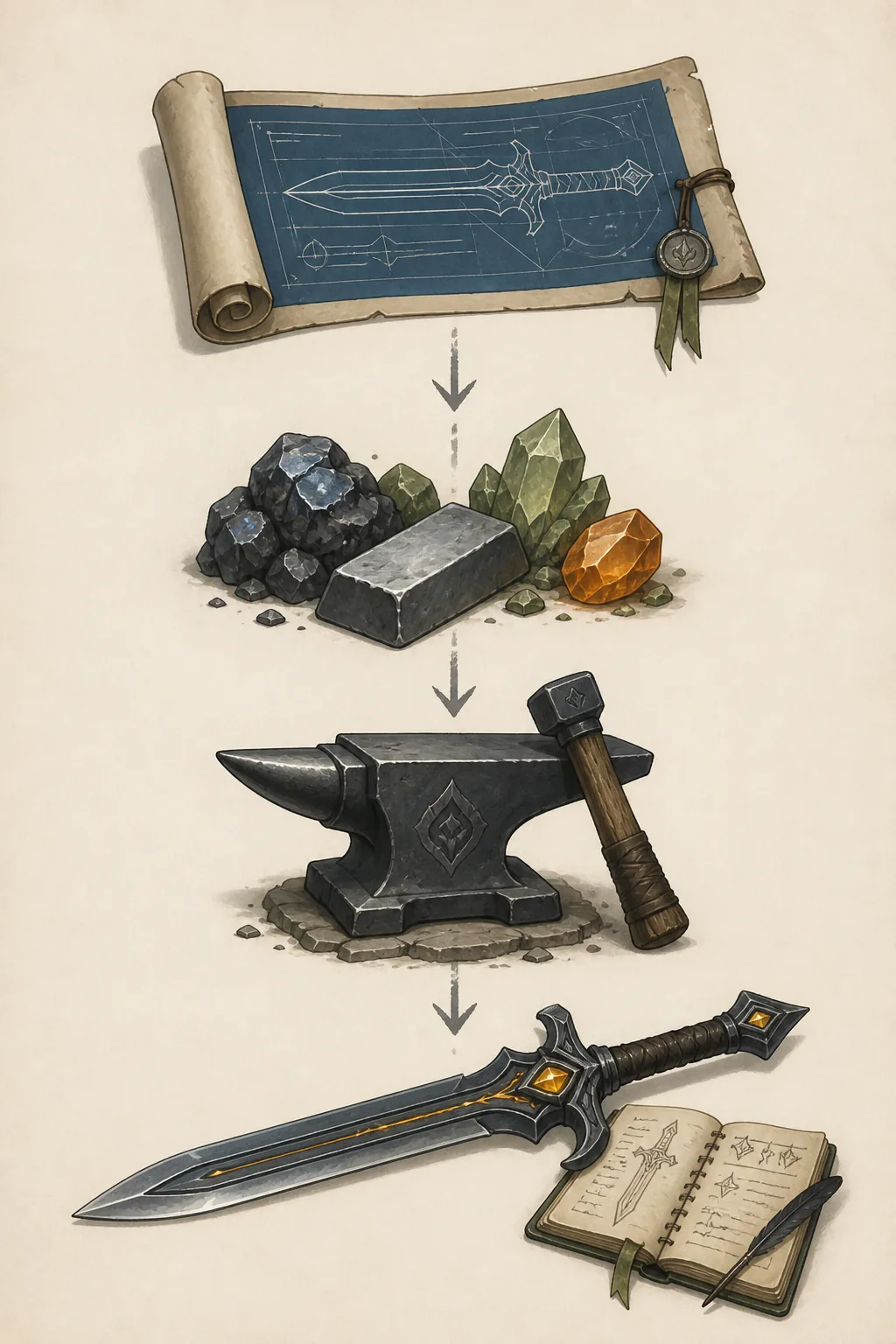
Forge progression has two separate questions: can you access the blueprint or recipe, and does the resulting weapon solve the problem in your route? Confirm the source and requirement first. Then choose a weapon role, use a replaceable material for the first test, record the visible result, and repeat the same type of run before spending more.
This is why the weapon tier list should be read as a priority guide, not as a permanent DPS leaderboard. If a formula, material value, or named weapon cannot be verified, label it unranked. The detailed forge guide holds blueprints, materials, upgrades, and post-update checks so this overview stays readable for beginners.
| Decision | Check first | Risk | Next action |
|---|---|---|---|
| Choose a weapon | Role, control, and current access | Rare name may not fit the route | Test the same encounter |
| Find a blueprint | Source, requirement, and date | Old video can be stale | Record exact menu wording |
| Upgrade | One material or timing change | Four changes hide the cause | Repeat before scaling |
| Compare weapons | Same race, scroll, pet, and route | Different setup distorts result | Keep a simple run note |
- Blueprint source and crafting result are separate facts.
- A stable control pattern is a better first target than an unverified rare item.
- Use the dedicated forge guide for detailed recipe notes.
Scrolls and pets: track the source and the job
Scrolls and pets answer different beginner needs, but both become easier to update when their source, requirement, and observed effect are recorded separately. For a scroll, note the activity or reward text, access condition, use requirement, and test result. For a pet, note how the egg was obtained, what the pet supports, and whether the benefit helps the current farm.
Avoid turning one guide video or an old community table into a permanent drop rate or multiplier. Keep weapon, forge, race, and route stable when testing a scroll or pet so the result can teach you something. The scrolls and pets guides expand the evidence without making this overview difficult to scan.
| System | What to record | Beginner action | Evidence boundary |
|---|---|---|---|
| Scroll source | Activity, requirement, date, reward text | Repeat the route before calling it confirmed | Do not invent a fixed round |
| Scroll use | Visible condition and same encounter | Change one support at a time | Separate effect from weapon change |
| Pet egg | Source, cost or activity, date | Use when it supports the current farm | Do not claim a rate without proof |
| Pet upgrade | Visible cost and observed result | Compare the same route | Keep uncertain values unranked |
- The phrase how to get scrolls in Iron Soul Dungeon needs a source and a repeatable route, not a guessed round number.
- A pet is progress when it helps a current goal; rarity alone is not a route.
Boss and gold routes: find the first failure point
A boss route and a gold route should be planned together because a faster run is not useful if it stops at the same failure point. Start with the encounter you can repeat, record where the run breaks, and change one support: weapon control, forge, race, scroll, or pet. When the run improves, keep the route stable long enough to know what helped.
Gold farming also needs a stop condition. If a route costs more time, materials, or failed attempts than it returns, record the tradeoff rather than calling it the best farm. Boss preparation should answer a player problem such as survival, damage timing, or reward access, then point to the relevant guide page.
| Run stage | Goal | Route decision | Stop condition |
|---|---|---|---|
| Early dungeon | Learn timing and control | Repeat a low-risk route | Stop when the first failure is clear |
| Gold loop | Measure reward against time | Keep route and setup stable | Stop if cost exceeds useful gain |
| Boss preparation | Fix one failure point | Change one support | Stop comparing after mixed changes |
| Post-patch route | Check reward and difficulty | Record date and source | Do not reuse an old route blindly |
- A route is useful when another player can repeat the same decision.
- Keep gold, boss, and reward claims dated after updates.
- Use the forge, pets, scrolls, and tier pages for deeper checks.
Iron Soul Dungeon wiki FAQ
What should a new player do first?
Check the dated code table, keep some race rerolls, learn one controllable weapon, and test forge choices with replaceable materials before chasing rare outcomes.
Where is the full Iron Soul Dungeon codes list?
The dedicated codes page contains the six-field table with Code, Reward, Source URL, First seen, Last verified, and Status, including an expired archive example.
How should I use race rerolls?
Set a measurable goal first, record the current race and route, then compare the same encounter after one change. Do not treat an unverified race ranking as permanent.
How do forge, scrolls, and pets fit together?
Keep the weapon and route stable, test one support at a time, and record source, date, requirement, and visible result. The dedicated guides hold deeper system notes.
How do I plan a boss and gold route?
Repeat a route, identify the first failure point, measure time and reward, and change one support before deciding whether the route is better.
Wiki route in one sentence
Use codes for a dated starting boost, rerolls for a clear goal, forge for a repeatable weapon test, scrolls and pets for controlled support, and boss or gold routes for measurable progression.