
Evidence-graded guide
Iron Soul Dungeon Tier List: Races, Weapons, Pets and Progression Priorities
The most useful Iron Soul Dungeon tier list is not a permanent ranking of every race, weapon, or pet. Public values change, and several named stats are not reliably documented. This guide ranks progression priorities by how safely and repeatedly they help a run, then marks named items unranked when the evidence is not strong enough.

Quick verdict: rank the decision, not an invented stat
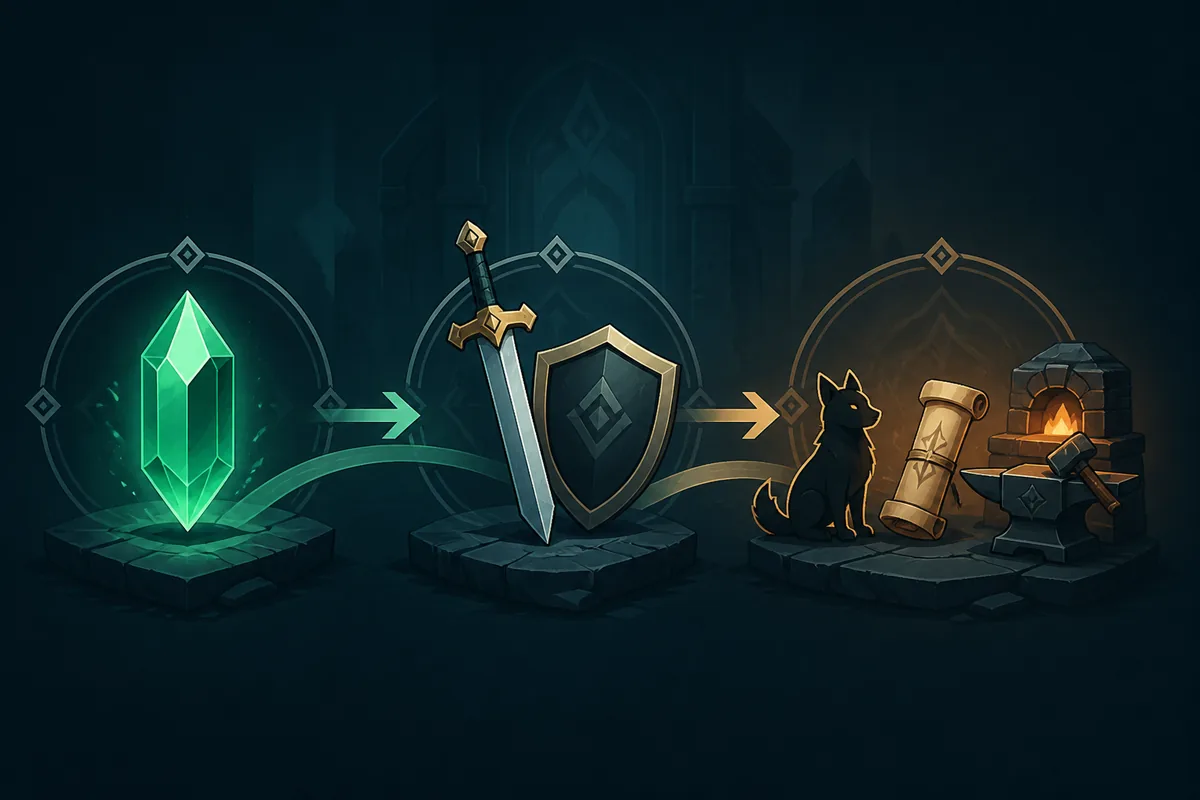
If you need a simple answer, put a controllable weapon route and a verified reward loop in S tier. Put race rerolls, forge timing, and useful pet progression in A tier because they become more valuable once your basic loop is stable. Treat scroll farming, boss specialization, and rare-material chasing as B-tier priorities until they solve a specific problem in your run.
That ordering is deliberately different from a screenshot of colored letters. It tells a new player what to do next, while protecting experienced players from spending rare materials because a copied list called one item best. The homepage already covers the broad Iron Soul Dungeon codes and wiki hub; this page focuses on comparison and decision-making.
There is no responsible permanent named-race or named-weapon ranking in this guide without current stat evidence. A patch, duplicate-race upgrade, forge change, or pet balance adjustment can move a name between tiers. When that evidence is missing, unranked is more useful than a confident but untestable S tier.
How the Iron Soul Dungeon tiers are scored
This is a practical tier list for progression choices, not an official ranking. Each entry is judged on three questions: does it improve more than one common run state, can a player check the advice in the game or a traceable source, and does the recommendation remain useful when a code or seasonal reward expires? A high tier needs repeatable value and a clear verification path.
The evidence rule matters because search results often mix current codes, old screenshots, guide summaries, and video claims. Similarweb shows strong demand for tier-list language, but demand does not prove that a particular race or pet has a stable multiplier. The table therefore separates a useful action from a named stat claim and gives each a safe boundary.
| Tier | Meaning | Evidence rule |
|---|---|---|
| S | A repeatable priority that improves many runs | Useful without hidden formulas and easy to recheck |
| A | A strong supporting system after the baseline is stable | Public guidance exists, but the value depends on the run |
| B | A situational goal for a specific bottleneck | Worth testing only when it solves a visible problem |
| Unranked | A named race, weapon, pet, or drop claim without current proof | Do not convert an old list or video into a permanent tier |
- Stable priority beats rare priority when you are still learning the dungeon loop.
- A source and a recent check window matter more than a colorful label.
- A tier can describe a goal without claiming an exact percentage or DPS value.
Current tier list snapshot
Use this table as a route planner. It is intentionally written around player situations so it stays useful when individual codes expire or a race name changes. The last column is the action to take, not a promise that the action is optimal for every account.
The named entries are left unranked because the available public material does not provide a complete, current, and repeatable stat table for every race, weapon, and pet. That is a content boundary, not a missing section: filling it with guesses would make the page less trustworthy.
| Tier | Priority | Best fit | Safe next action |
|---|---|---|---|
| S | Verified codes plus a repeatable starter loop | New players | Check the source and reward, redeem only what is still useful, then save rerolls |
| S | A controllable weapon before rare-material chasing | New or stuck players | Choose a role you can use consistently and learn its timing |
| A | Forge timing and material discipline | Players upgrading gear | Test lower-risk materials before spending scarce resources |
| A | Pet eggs after a clear farming goal | Players with a stable route | Treat a pet as progression support, not an automatic cosmetic upgrade |
| B | Scroll farming and boss specialization | Players facing a defined wall | Farm one missing resource and record what actually changes |
| Unranked | Exact named race, weapon, or pet tiers | Any account | Wait for current stat evidence; do not copy an old tier list as fact |
Race rerolls and weapon choices
Race rerolls are valuable because they are difficult to evaluate before you know your preferred weapon role and farming route. A new player should not spend every reroll immediately. First record what the current race changes, test the effect in the same type of run, and keep one decision point available for a later patch or a better understanding of the build.
The practical tier is therefore A for race rerolls as a resource, but unranked for named races when current values cannot be checked. This distinction answers the question behind many tier-list searches: the reroll system can matter a lot even when the exact winner is not proven. Duplicate-race progression or a new season reward can also change the best use of a reroll without changing the beginner route.
For weapons, controllability belongs in S tier. A weapon that lets you repeat the same spacing, timing, and target choice is easier to evaluate than a rare weapon whose damage cannot be measured reliably. When you are stuck, change one variable at a time: weapon role, forge material, scroll route, or pet support. A tier list is most useful when it reduces that uncertainty.
- Keep a reroll reserve until the weapon and farming goal are clear.
- Compare the same encounter before and after a change instead of relying on one lucky run.
- Do not call a race S tier from a single old video, screenshot, or copied table.

Forge, pets, scrolls and bosses
Forge decisions are A tier because they can improve the value of a stable weapon, but the order matters. A player who spends rare materials before learning the weapon role may create an expensive result that is hard to compare. Start with a lower-risk test, write down the material and timing, and only scale the investment when the outcome helps the same farming loop more than once.
Pets belong in A or B depending on the run. A pet that helps a clear farming goal is an A-tier support decision; opening eggs without knowing what the account needs is B-tier chasing. The same logic applies to scrolls. Farm a scroll because it answers a boss, survival, or resource problem, not because a list says every rare drop must be opened immediately.
Boss preparation should be treated as a feedback loop. Identify the first failure point, then change one support system and repeat the encounter. If the problem is control, revisit the weapon. If the problem is a missing resource, move scroll or pet farming up temporarily. This keeps the tier list connected to a real decision rather than a fixed ranking detached from the account.
| Run problem | Move up temporarily | What to record |
|---|---|---|
| Damage is inconsistent | Weapon control and forge timing | Role, material, timing, and repeatable result |
| Boss survives every attempt | Scroll route and defensive support | First failure point and one changed variable |
| Farm is too slow | Pet goal and route efficiency | Target resource, run duration, and reward |
| Rerolls are running out | Information gathering over chasing | Current race effect and future decision point |
How to verify a tier after an Iron Soul Dungeon update
Treat every tier as a dated editorial decision. After a weekend, season, map, or balance update, check whether a code reward changed, whether the race or weapon behavior is still described the same way, and whether a pet or scroll now supports a different route. A page that keeps the same colors while its evidence is old is not a current tier list.
The strongest update routine is small and repeatable. Start with the official Roblox experience and public media for identity, then compare current guide notes with the in-game result. Record the date, source, exact claim, and confidence. If a claim cannot be reproduced, move it to Unranked instead of silently keeping it in S or A.
- Check the update date and the exact source before reusing a tier.
- Test one change in a repeatable run and keep the old result for comparison.
- Move unsupported named ranks to Unranked until current evidence exists.
- Update the table, FAQ, captions, and source ledger together so old wording does not survive in one locale.
FAQ
What is the best race in Iron Soul Dungeon?
There is not enough current, repeatable public stat evidence here to name one race as a permanent S-tier winner. Treat race rerolls as an A-tier resource: record the effect you can verify, keep a reserve, and reassess after a patch or when your weapon role is clear.
What is the best weapon in Iron Soul Dungeon?
The safest S-tier weapon priority is controllability, not an unverified name. Choose a weapon role whose spacing and timing you can repeat, then compare forge and scroll changes in the same encounter. A named weapon should remain unranked until its current behavior can be checked.
Are pets S tier in this Iron Soul Dungeon tier list?
Pets are usually A tier when they support a known farming or boss goal, and B tier when the player opens eggs without a plan. Their value depends on the route, so the guide does not assign permanent named-pet ranks without current evidence.
Why are some races, weapons and pets unranked?
Unranked means the available evidence does not support a current, repeatable comparison. It is not a claim that the item is weak. Moving it into a tier requires a source, a check date, and enough in-game or documented detail to reproduce the conclusion.
How often should this tier list be updated?
Recheck it after season, map, weekend, balance, or reward changes. Codes and short-term rewards should be checked first, followed by race effects, forge behavior, pets, scroll routes, and boss preparation. The page should show what changed rather than only changing a date.
Summary
For a safe Iron Soul Dungeon start, rank a repeatable weapon route and verified reward checks above rare-material chasing. Keep race rerolls, forge timing, and purposeful pet use in the supporting tiers. Leave exact named rankings unranked until current values can be checked. That boundary makes the guide less flashy, but it gives each update a clear way to improve the answer.