
Evidence-led crafting guide
Iron Soul Dungeon Forge Guide: Blueprints, Upgrades and Weapon Choices
The safest answer in this Iron Soul Dungeon forge guide is to treat crafting as a controlled test, not a race to spend every rare material. Confirm the blueprint or recipe you can actually access, choose a weapon role you can repeat, test the lowest-risk material first, record the result, and only then invest more. This guide separates what a player can check from what should stay unranked until a current source or in-game result confirms it.

Iron Soul Dungeon forge guide: the safe answer first
If you only need the short version, forge for a repeatable role before you forge for rarity. A new player should keep a usable weapon, verify the blueprint path, and spend common materials while learning the result. A player stuck on a boss should change one variable at a time: weapon, material, upgrade, scroll, or pet support. That makes the next run useful evidence instead of another expensive guess.
Public guide pages and search results mention weapons, forge paths, blueprints, and upgrades, but they do not provide one complete, current, reproducible table for every item and stat. That is why this page does not invent a permanent best recipe or DPS ranking. When a value cannot be checked in the game or traced to a current source, the right label is unverified, not S tier.
| Situation | First action | Avoid |
|---|---|---|
| New player | Learn one controllable weapon and test a common material | Spending rare resources before knowing the role |
| Searching for a blueprint | Record the exact source, item name, and unlock condition | Treating an old video or copied list as a current recipe |
| Stuck on a boss | Change one forge or combat variable and repeat the encounter | Changing weapon, pet, scroll, and material together |
| After a patch | Recheck the menu, recipe, reward, and result before updating notes | Carrying an old stat or drop claim forward |
- Stable control is a better first target than a rare name.
- A blueprint is useful only when its current access path is clear.
- Write down the material, weapon, result, and date before scaling the investment.
The Iron Soul Dungeon forge loop: blueprint, material, test, invest
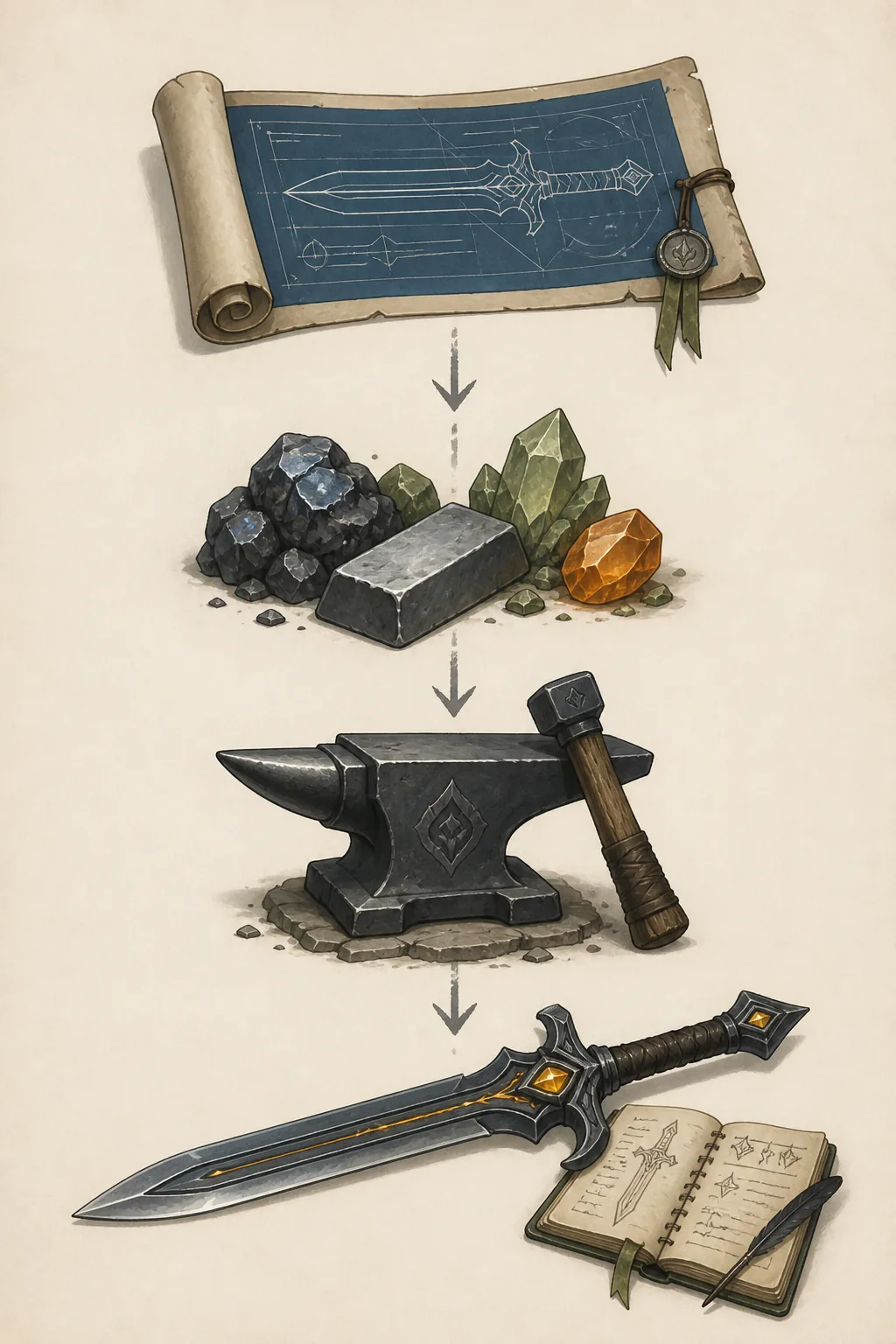
A practical forge loop has four stages. First, identify the blueprint or recipe and confirm that it belongs to the current game state. Second, separate materials by how difficult they are to replace. Third, make a controlled test with a weapon role you already understand. Fourth, compare the result in the same kind of run before using scarce resources on another attempt.
The order matters more than a flashy result. If the first test changes the weapon, material, and upgrade at once, you cannot tell which choice helped. If the result is weaker, the record still prevents you from repeating the same mistake. This is also the safest way to handle an Iron Soul Dungeon crafting guide when exact formulas are not publicly stable.
| Step | What to record | Decision gate |
|---|---|---|
| 1. Identify | Blueprint name, source, date, and access condition | Can another player verify the same path? |
| 2. Prepare | Weapon role and material tier | Can the material be replaced if the test fails? |
| 3. Forge | Recipe inputs, upgrade choice, and visible result | Did only one important variable change? |
| 4. Repeat | Same encounter, route, or target problem | Did the result help more than one run? |
Blueprints and the question: how to get a blueprint in Iron Soul Dungeon
The blueprint question deserves its own checkpoint because an item name is not the same as a verified unlock path. Search demand includes how to get a blueprint in Iron Soul Dungeon and how to get a blueprint for the Fist Relic, but the available public material does not establish one permanent route that can safely be stated as fact here. Check the in-game source, the current reward screen, or a traceable update note, then record the exact wording rather than paraphrasing an old claim.
When you find a blueprint, capture four details: the named item, the source activity, the required material or level, and the date checked. If one of those details is missing, keep the entry as a lead. That protects the guide from turning a search snippet into a false recipe and gives future updates a concrete fact to verify.
| Blueprint note | Useful evidence | Current boundary |
|---|---|---|
| Source | In-game reward, menu text, or current developer note | A second-hand summary may be outdated |
| Requirement | Visible material, level, quest, or activity condition | Do not infer a requirement from item rarity |
| Result | The crafted weapon and visible upgrade outcome | Do not claim hidden DPS without a formula |
- Keep the official item spelling in notes so players can match the menu.
- Separate a blueprint source from a crafting recipe; they may be different checks.
- If the path changes, update the source, date, FAQ, and example together.
Choose a weapon before spending rare forge materials
A forge guide should begin with the weapon role, not with a universal tier claim. Decide whether the run needs safer spacing, faster clear speed, boss control, or a way to recover from mistakes. Then choose the weapon you can use consistently. A weapon that produces a repeatable result is easier to evaluate than a rare weapon whose stats cannot be checked, even when the rare name sounds stronger.
The query about forging a specific weapon is usually a procedure question: can the blueprint be accessed, are the ingredients known, and can the result be tested in the same encounter? Treat those as separate answers. If the recipe is confirmed but the weapon still fails the run, the issue may be timing or route choice rather than the forge itself. This boundary prevents the guide from turning every boss problem into a material problem.
| Player goal | Weapon test | What success looks like |
|---|---|---|
| Learn the game | Repeat spacing and timing in a low-risk run | Fewer avoidable mistakes, not a guessed damage number |
| Clear a boss | Keep the same boss and change only the weapon or forge result | The first failure point moves or becomes easier to manage |
| Farm resources | Measure the same route with the same target | The run becomes more repeatable or less expensive |
- Pick a role you can repeat before chasing a named best weapon.
- Compare the same encounter before and after one forge change.
- Use the tier-list guide for priority context, then return here for the forge process.
Forge upgrades, recipes and stats: what to verify
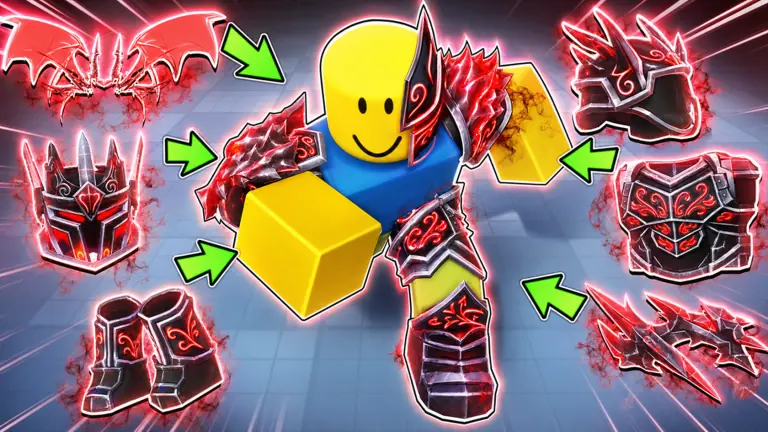
Searchers often ask how forge upgrades work in Iron Soul Dungeon, whether a forge recipe is best, or which items are worth forging. The useful answer is a verification checklist rather than an invented number. Confirm which input changed, what the menu says the upgrade affects, and whether the result is visible in more than one run. If a page or video gives a percentage without a current source, treat the percentage as unverified.
For a recipe comparison, keep the comparison narrow. Use the same weapon role, same material class, and same problem. If you compare two recipes while also changing the pet, scroll route, and boss, the result cannot explain the recipe. This method also makes future updates easier because a changed material or stat has a clear place in the record.
| Claim type | Check before publishing | Label if evidence is missing |
|---|---|---|
| Recipe inputs | Visible current ingredients or a first-party note | Unverified recipe |
| Upgrade effect | Menu text plus a repeatable before/after test | Reported effect, not a fixed stat |
| Best item | Several comparable runs and current source support | Situational choice |
| Exact DPS or rate | A current formula and reproducible inputs | Do not publish a number |
- Use the exact recipe wording from the current game when it is available.
- A good upgrade is one that solves the account's visible bottleneck.
- Keep uncertain values out of title, schema, and FAQ answers until verified.
Three practical forge decisions
For a new player, the right first craft is the weapon that makes the basic route understandable. Check the blueprint, use a replaceable material, and write down whether the weapon is controllable. Do not spend the rarest material simply because the result sounds like an upgrade. Information gained from a cheap test can save the scarce material for a later, better-informed decision.
For a player stuck on a boss, define the failure point before opening the forge. If the character cannot maintain spacing, test a controllable weapon. If the weapon is fine but the run lacks survivability, a scroll or pet route may matter more. If the result improves only one lucky attempt, repeat the same encounter before calling the recipe successful.
| Example | Recommended decision | Next note |
|---|---|---|
| New player with one blueprint | Test a common material on a controllable role | Record the access path and result |
| Boss run fails at close range | Test weapon control before adding unrelated upgrades | Record the first failure point |
| Rare material is nearly empty | Pause and verify the recipe and source | Save the material until the evidence is clear |
How to recheck the forge after an Iron Soul Dungeon update
Forge information is update-sensitive. After a map, balance, reward, or seasonal change, recheck the blueprint source, recipe wording, material availability, upgrade result, and any screenshot caption that might imply an old menu. The check does not need to rewrite the whole guide: update the specific claim, its date, and the example that depends on it.
A disciplined update note should say what changed and what did not change. If the source is unavailable, keep the claim cautious instead of filling the gap with a guessed latest recipe. This is especially important for questions such as how to get a forge staff or how to forge a specific weapon, because a search result can remain visible after the in-game path changes.
| Recheck | Evidence to save | Page field to update |
|---|---|---|
| Blueprint | Current menu or reward source | Blueprint section and FAQ |
| Materials | Available input and requirement | Recipe table and examples |
| Result | Visible upgrade and repeatable test | Upgrade guidance and caveats |
| Media | Current official thumbnail or source note | Alt text, caption, and source ledger |
- Use a date and source for every volatile forge claim.
- Do not call an item latest, best, or guaranteed without current evidence.
- Keep the source ledger and this page aligned after a meaningful change.
Forge guide FAQ
How do I get a blueprint in Iron Soul Dungeon?
Check the current in-game reward or blueprint source first and record the exact item name, activity, requirement, and date. Public search results mention blueprint questions, but this guide does not invent a permanent unlock path when the current evidence is incomplete.
How do I forge a specific weapon in Iron Soul Dungeon?
Verify that the blueprint is accessible, confirm the current ingredients, and test the weapon in the same type of encounter. If one of those steps cannot be confirmed, keep the recipe as an unverified lead rather than presenting an old list as fact.
How do forge upgrades work in Iron Soul Dungeon?
Change one important input at a time, read the visible menu effect, and repeat the same run before concluding that an upgrade helped. Do not publish an exact percentage or DPS value without a current formula or repeatable source.
What should a beginner forge first?
Start with a controllable weapon role and a replaceable material. The goal is to learn the weapon and the route, not to spend the rarest resource before you know whether the result solves a real problem.
Is there one best Iron Soul Dungeon forge recipe?
There is no safe permanent answer without a current, comparable recipe table. The best choice depends on the weapon role, material cost, account bottleneck, and the update state you can verify.
Summary
A useful Iron Soul Dungeon forge guide is a repeatable decision process: verify the blueprint, choose a controllable weapon role, test replaceable materials, record the visible result, and invest scarce resources only after the same problem improves more than once. This approach answers blueprint, recipe, upgrade, and specific-weapon questions without pretending that incomplete public data proves a permanent best item.